









When you are standing on the foundry floor, watching the electric arc furnace roar to life, the last thing you want to worry about is the structural integrity of your consumables. Whether you are stirring molten steel or gouging out a defect in a massive casting, the humble graphite rod plays a pivotal role. It isn't just a stick of carbon; it is a precision tool engineered to withstand hellish conditions. As a manufacturer based in Handan, I’ve seen firsthand how the right carbon materials can dictate the efficiency of an entire production line. This article explores the critical role of precision rod production, particularly in investment casting and high carbon industrial environments, helping you understand why quality matters more than ever.
Unlocking the Power of Graphite and Carbon Materials in Modern Industry
At its core, a graphite rod is a marvel of material science. While carbon is the fourth most abundant element in the universe, the way carbon atoms are arranged makes all the difference. In graphite, these atoms form layers of hexagonal lattices that slide over one another. This unique graphite structure gives the material its legendary lubricating properties and high thermal conductivity.
In the world of industrial applications, we often distinguish between synthetic and natural graphite. While natural graphite has its uses, high-performance graphite rods are commonly manufactured from synthetic sources like petroleum coke. This allows for a purity and consistency that nature simply cannot match. Carbon materials used in these rods are processed at ultra-high temperatures to ensure chemical stability and mechanical strength.
When we talk about a rod, we aren't just talking about a cylinder. We are talking about a component that acts as a conductor, a stirrer, a heating element, or a structural support. The versatility of graphite means it can be found in everything from nuclear reactors to the casting process of jewelry. The use of carbon in this solid form provides a solution where metals would simply melt or corrode.
How does Precision Machine Technology Revolutionize Rod Production?
Gone are the days when graphite products were rough, extruded logs with poor tolerances. Today, rod production is a feat of precision engineering. A modern machine used in rod manufacturing utilizes advanced CNC (Computer Numerical Control) technology to grind and shape graphite blocks into rods with microscopic accuracy.
Dimensional accuracy is paramount. In applications like EDM (Electrical Discharge Machining), a graphite rod must act as an electrode with perfect geometry. If the rod deviates by even a fraction of a millimeter, the final metal mold will be flawed. This level of precision ensures that the graphite rod fits perfectly into holders, minimizing contact resistance and energy loss.
Furthermore, the manufacturing process involves strictly controlled baking and graphitization cycles. This ensures that the carbon content is uniform throughout the rod. A well-made rod will exhibit consistent electrical properties from one end to the other, which is vital for automated systems that rely on predictable performance.
Why are Graphite Rods Critical for Investment Casting and the Foundry?
The foundry is where graphite rods play a starring role. Investment casting, also known as lost-wax casting, relies heavily on the dimensional stability and heat resistance of graphite. In this casting process, graphite rods are used as cores or stirring mechanisms.
When dealing with molten metal, you need a tool that won't dissolve or react. Graphite rods provide this chemical inertness. They are often used as stirring rods to homogenize the alloy or skimming tools to remove slag. Because graphite is naturally non-wetting to most molten metals, the metal doesn't stick to the rod, ensuring a clean pour and minimal contamination.
Additionally, graphite molds and components are essential for casting precious metals and special alloys. The fine grain structure of a high-quality graphite rod imparts a superior surface finish to the cast metal, reducing the need for expensive post-casting machining. For specialized needs, we often produce Graphite Special-Shaped Parts derived from high-strength rod stock to fit unique foundry setups.
Can Your Graphite Rod Withstand the Extreme Conditions of a Furnace?
Inside a furnace, conditions are brutal. Temperatures can soar above 3000°C. Most materials would vaporize, but a graphite rod actually gets stronger as it heats up (up to about 2500°C). This counter-intuitive property is what allows graphite to withstand the thermal shock of rapid heating and cooling cycles.
Thermal expansion is the enemy of structural integrity. If a rod expands too much when heated, it can crack the casing or snap. Standard graphite has a very low coefficient of thermal expansion, ensuring that the rod maintains its shape even under extreme heat. This is crucial for heating elements in vacuum furnaces, where the rod must radiate heat consistently without deforming.
Graphite rods also serve as heating elements themselves. Their electrical conductivity allows them to act as resistors, generating heat when electric current passes through them. This efficient conversion of electricity to heat helps optimize energy consumption in high-temperature processing.
What Makes Graphite Rods Ideal for High-Temperature Applications?
High-temperature applications demand materials that don't just survive; they must perform. Graphite offers a unique combination of refractoriness and conductivity. Whether it is in the aerospace industry for heat treating turbine blades or in the semiconductor industry for crystal growing, graphite rods are the backbone.
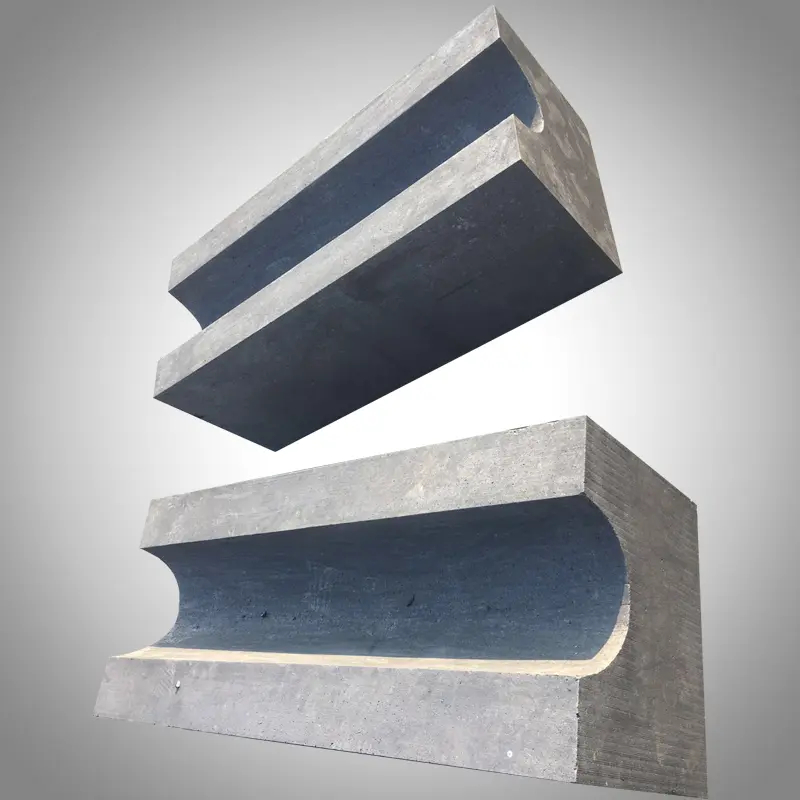
One of the key features that make them ideal is their oxidation resistance—though this requires caveat. While carbon oxidizes at high temperatures in air, modern graphite rods can be treated with anti-oxidation coatings to significantly extend their service life. In inert atmospheres (like argon or vacuum), graphite rods can operate indefinitely at temperatures where even tungsten would fail.
The mechanical strength of the rod at these temperatures ensures that it can support loads, such as holding trays of parts inside a heat treatment furnace, without bending or creeping over time.
How Do Electrical Conductivity and Chemical Resistance define Industrial Applications?
Beyond heat, industrial applications often involve electricity and aggressive chemicals. Graphite rods possess excellent electrical conductivity, often comparable to some metals. This makes them perfect for electrolysis anodes. In chemical plants, graphite rods are used to conduct current into corrosive solutions (like chlor-alkali production) where metal rods would dissolve in minutes.
Corrosion resistance is a hallmark of quality carbon graphite. Graphite is chemically inert to almost all acids, alkalis, and organic solvents. This chemical resistance allows graphite rods to be used in harsh chemical environments, such as stirrers in chemical reactors or electrodes in electroplating baths.
For welders, DC graphite rods are indispensable for arc gouging. Here, the rod conducts a massive current to melt the base metal while a jet of air blows the molten material away. The rod must be conductive enough to carry the current but robust enough not to shatter under the air pressure.
The Art of Graphite Machining: From Standard Blocks to Custom Components
Graphite machining is a specialized field. Unlike metal, graphite produces fine dust rather than chips when machined. This requires specific dust collection systems and sealed machine tools. However, the material is soft and free-cutting, allowing for incredible precision.
We can turn a standard graphite rod into intricate shapes with threads, grooves, and bores. Machined graphite components are used as heater connectors, susceptors, and sealing rings. The ability to customize the rod geometry means that engineers can design systems with tighter tolerances and better thermal interfaces.
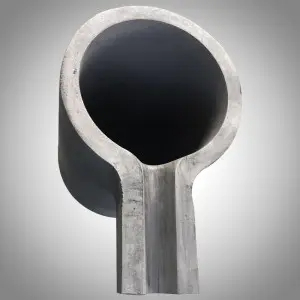
From simple stirring rods to complex heating elements, the flexibility of graphite machining ensures that the rod meets the exact specific requirements of the client. This customization is a key part of our service at Heyuan, where we turn raw Graphite Powder and blocks into functional art.
Analyzing Service Life: How Durability Reduces Downtime and Maintenance Costs
In any production line, downtime is the enemy. A rod that breaks mid-cycle causes production stoppages, safety hazards, and scrap material. Durability and reliability are therefore not just features; they are cost-saving measures.
High-performance graphite rods are highly durable against physical wear and thermal stress. By selecting a rod with the correct density and grain size, you can extend the replacement interval significantly. For example, in continuous casting, a graphite rod (die) with superior wear resistance produces more meters of metal before needing replacement.
This longevity directly translates to lower downtime and maintenance costs. While a premium graphite rod might cost slightly more upfront, the reduction in frequency of changes and the consistency of the casting process result in a much lower total cost of ownership.
Carbon Content and Quality: What Distinguishes High-Performance Rods?
Not all carbon is created equal. The carbon content and the degree of graphitization determine the quality of the rod. High carbon purity (often >99.9%) is essential for semiconductor and nuclear applications to prevent contamination.
Lower quality rods might contain higher ash or metal impurities. These impurities can act as catalysts for oxidation, causing the rod to degrade faster at high temperatures. They can also leach into the molten metal during investment casting, ruining the alloy chemistry.
At Heyuan, we utilize premium calcined petroleum coke and needle coke to ensure our graphite products have high density and low electrical resistance. This focus on quality carbon graphite ensures that every rod delivers maximum performance. This is similar to the standards we apply to our UHP Graphite Electrodes, where material integrity is non-negotiable.
Selecting the Right Graphite Rods for Specific Requirements
Choosing the right rod involves balancing several factors: conductivity, strength, purity, and cost.
- For Electrodes: Prioritize electrical conductivity and thermal shock resistance.
- For Stirring: Prioritize mechanical strength and oxidation resistance.
- For Heaters: Prioritize dimensional stability and high-temperature purity.
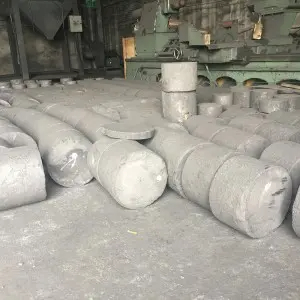
It is also important to clarify a common confusion: while the term "carbon rod" is sometimes used for consumer goods like fishing rods, industrial graphite rods are vastly different. Fishing rods utilize carbon fiber reinforced polymer for flexibility. Industrial graphite rods are solid blocks of graphitized carbon designed for rigidity and heat.
Understanding your specific requirements allows us to recommend the correct grade. Whether you need a coarse-grain rod for rough gouging or an isostatically pressed rod for fine precision work, the specification sheet tells the story.
Key Takeaways
- Material Science: Graphite rods utilize the unique layer structure of carbon atoms to provide exceptional thermal and electrical conductivity.
- Production Precision: Modern rod manufacturing uses CNC machines to achieve high dimensional accuracy, crucial for investment casting and EDM.
- Foundry Essentials: Graphite rods provide chemical inertness and heat resistance, making them indispensable for handling molten metal and as stirring rods.
- Extreme Endurance: The ability to withstand high temperatures and thermal shock allows graphite rods to function in furnaces where other materials fail.
- Cost Efficiency: Investing in high-performance, highly durable rods reduces downtime and maintenance costs by extending service life.
- Versatility: From corrosion-resistant chemical anodes to precise heating elements, graphite rods are commonly used across a vast range of applications.
Post time: 2 月-09-2026