










Graphite is more than just the "lead" in a pencil; it is the silent backbone of modern metallurgy and heavy industry. For professionals in the steel and foundry sectors, understanding the nuances between flake graphite, graphite powder, and artificial graphite isn't just academic—it’s a matter of cost efficiency and production quality. Whether you are running an Electric Arc Furnace (EAF) or sourcing recarburizers to fine-tune your steel chemistry, the different types of graphite you choose will dictate your thermal management, conductivity, and bottom line. This guide dives deep into the difference between natural sources and synthetic engineering to help you make smarter procurement decisions.
What exactly is Natural Graphite and where does it come from?
Natural graphite is a mineral form of carbon that occurs naturally in metamorphic and igneous rocks. It is essentially the result of carbon-rich organic material (like ancient plants) being subjected to geological heat and pressure over millions of years. Unlike its shiny cousin, the diamond, graphite has a layered structure that makes it soft, lubricious, and electrically conductive.
When we talk about natural graphite, we are usually categorizing it based on its crystallinity and morphology. The earth doesn't produce uniform products, so mining operations yield different variations. The most commercially significant types are flake graphite, amorphous graphite, and crystalline vein graphite. Each has a unique geological footprint. For a buyer like you, knowing the origin matters because it influences the purity and the particle size of the material you end up tossing into your furnace or crucible.
While natural graphite is dug from the ground, it isn't ready for industrial use immediately. It requires beneficiation—processes like flotation and leaching—to remove impurities. The goal is to isolate the carbon content to levels that make it useful for metallurgy or refractory applications.
Why is Flake Graphite considered the most versatile Natural Flake?
Among the different types of graphite, flake graphite is often considered the "king" of natural varieties due to its distinct plate-like morphology. Imagine millions of tiny fish scales made of pure carbon. This natural flake structure is defined by its good thermal conductivity and high melting point. Because the flakes float free in the ore, they are easier to purify than other types, often reaching carbon content levels of 85% to 98% after standard processing.
Flake graphite comes in various sizes, from "jumbo" flake to fine powder. The larger the flake, generally, the higher the value. Why? Because large flakes retain their structure better under high temperature conditions, making them ideal for expanded graphite production and high-end crucibles.
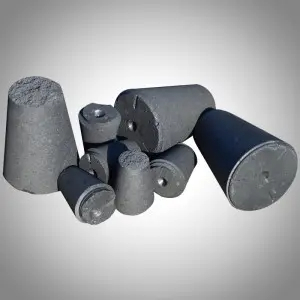
However, flake graphite powder is where a lot of the volume goes. When the flakes are ground down, they don't lose their essential properties. They still offer excellent lubrication and oxidation resistance. This makes flake graphite powder a staple in everything from brake linings to conductive coatings. In the steel industry, natural flake graphite is prized for its ability to withstand thermal shock, a critical factor when your furnace is cycling through massive heat loads.
What distinguishes Amorphous Graphite from Crystalline Graphite?
It is easy to get confused by the terminology, but the distinction between amorphous graphite and crystalline graphite is all about the crystal structure. Scientifically speaking, even "amorphous" graphite has crystals, but they are so small (microscopic) that the material looks like lumps of coal or dirt. It is sometimes called cryptocrystalline graphite.
Amorphous graphite is typically the least pure of the natural graphite family. It is often found in coal seams that were metamorphosed by nearby magma intrusions. Because the graphite particles are so fine and interlocked with impurities, it is difficult to purify economically. Therefore, you will often see it sold with lower carbon specifications, used in applications like foundry coatings or low-cost recarburizers where extreme purity isn't critical.
In contrast, crystalline varieties (like flake and vein) show visible crystals. Crystalline vein graphite is unique; it forms from fluid deposits and creates solid veins of extremely pure graphite (often 99%+) directly in the rock. However, it is much rarer than flake graphite. For most industrial applications requiring consistent thermal and electrical performance, crystalline forms are preferred over amorphous ones.
How is Artificial Graphite manufactured compared to Natural Graphite?
Artificial graphite, also known as synthetic graphite, is a product of human engineering. It doesn't come from a mine; it comes from a furnace. The synthetic graphite manufacturing process is complex and energy-intensive, designed to create a carbon structure that is more consistent and predictable than anything nature provides.
The primary raw material for artificial graphite is petroleum coke (or sometimes coal tar pitch). This coke is a byproduct of oil refineries. To turn this "sponge coke" or "needle coke" into graphite, it undergoes a process called calcination to remove volatiles, followed by graphitization.
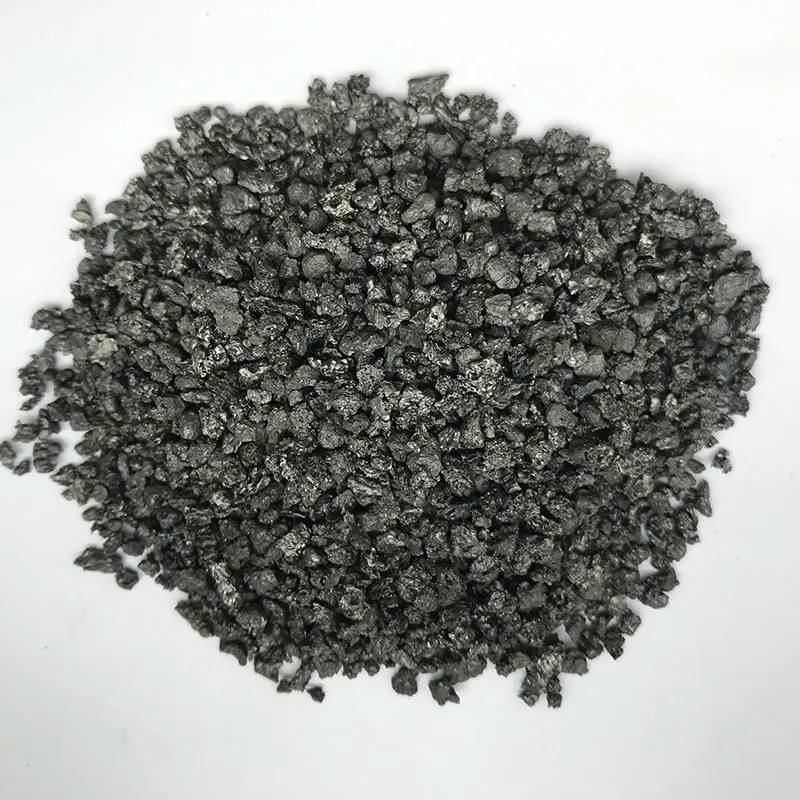
Graphitization involves heating the baked carbon to extreme temperatures (around 3000°C) in an electric furnace. At this high temperature, the carbon atoms rearrange themselves into the orderly, layered crystalline lattice typical of graphite. This is why materials like Graphite Petroleum Coke (GPC) are so vital for steelmakers—they are essentially artificial graphite used to adjust carbon levels with high precision.
What is the main Difference Between Natural and Artificial Graphite?
When comparing natural graphite and artificial graphite, the decision usually comes down to three factors: purity, density, and cost. Artificial graphite is generally purer (in terms of carbon percentage) and has better consistency. It possesses a lower ash content and higher electrical conductivity compared to most natural ores. This makes it the only viable choice for high-performance applications like Ultra High Power (UHP) electrodes used in EAF steelmaking.
Natural graphite, particularly natural flake, offers superior thermal conductivity in the plane of the flake and is significantly cheaper to produce. It has a higher "spring back" and lubricity.
Here is a quick breakdown:
- Natural Flake: Excellent thermal conductor, highly lubricious, cost-effective, anisotropic (properties vary by direction).
- Artificial: High purity (>99%), isotropic (uniform properties), higher mechanical strength, excellent for high temperature and high pressure environments, but more expensive.
The difference between natural and synthetic becomes stark when you look at oxidation. Synthetic graphite generally resists oxidation better at extreme temperatures due to its lower porosity and lack of metallic impurities that catalyze oxidation in natural forms.
How does Flake Graphite Powder revolutionize Refractory applications?
The refractory industry is the largest consumer of natural flake graphite. Why? Because refractories—the bricks and linings of your furnaces—must survive hellish conditions. Graphite material is added to refractory bricks (like Magnesia-Carbon bricks) because it prevents the molten metal and slag from wetting the brick surface.
Flake graphite powder acts as a structural cushion. When the furnace heats up, the ceramic components expand. Graphite, with its layered structure, absorbs some of this expansion, preventing the brick from cracking (spalling). Furthermore, the high thermal conductivity of the graphite helps conduct heat away from the "hot face" of the brick, extending the life of your furnace lining.
A graphite crucible is another classic example. Made of natural graphite and clay or silicon carbide, these vessels rely on the large flakes to conduct heat efficiently from the furnace to the metal being melted. If you used amorphous graphite here, the crucible might crack or fail to transfer heat fast enough. For specialized needs, we often see flake graphite and artificial graphite blended to balance cost and performance.
For those requiring precise shapes and heat resistance, Graphite Special-Shaped Parts are often machined from high-density artificial graphite blocks, but the raw powder for the molds often originates from natural flake.
What role does Expanded Graphite play in modern industry?
Expanded graphite is a fascinating modification of natural flake. By treating standard flake graphite with acid and then subjecting it to rapid heat, the layers of the graphite crystal force apart—expanding the volume by hundreds of times. It looks like a black, fluffy worm.
This "worm" graphite is soft and can be compressed into foils and sheets without any binder. This material is a superstar in sealing applications. Gaskets made from expanded graphite are standard in the petrochemical and automotive industries because they handle heat, pressure, and corrosive chemicals better than rubber or asbestos.
Furthermore, expanded graphite retains the corrosion resistance of the parent carbon but adds compressibility. It is also finding new uses in flame retardants. When added to plastics or foams, it expands during a fire, creating a char layer that chokes off the oxygen supply.
Is Graphene just a buzzword or the future of Graphite Materials?
You cannot talk about graphite structure without mentioning graphene. While graphite is a 3D stack of carbon sheets, graphene is a single, one-atom-thick sheet of that stack. It is the strongest material known to man and has incredible electrical properties.
Currently, graphene is often produced from natural flake graphite through chemical exfoliation (creating graphite oxide and then reducing it). While it is still expensive, it is moving from labs to factories. Applications in energy storage (supercapacitors) and fuel cells are expanding.
However, for heavy industries like steel, graphene is not yet a bulk consumable. We are still relying on bulk graphite products. But, the research into graphene helps us understand how to better utilize microcrystalline graphite and flake graphite in current battery anode materials. The rise of EVs (Electric Vehicles) has caused a massive spike in demand for flake graphite, as the anode of a Li-ion battery is essentially made of coated spherical graphite derived from flakes.
How is Graphite Widely Used in Metallurgy and Casting?
In metallurgy, carbon is king. Graphite is widely used not just as a tool (electrodes) but as an ingredient. Artificial graphite can be used as a premier recarburizer. When melting steel, if the carbon level drops too low, adding Graphite Powder or granular synthetic graphite restores the balance without adding sulfur or nitrogen impurities.
Graphite is used extensively in powder metallurgy. Here, graphite powder is mixed with metal powders (like iron or copper) and sintered. The graphite acts as a lubricant during the pressing process and then strengthens the final metal part.
In casting, graphite can be used as a mold wash. Coating the inside of a sand mold with a graphite suspension ensures the metal casting has a smooth finish and doesn't stick to the sand. For heavy-duty melting, the electric furnace relies on massive UHP Graphite Electrodes. These are almost exclusively artificial graphite because they must conduct massive currents (up to 100kA) without shattering under the thermal stress.
How do you choose the right Form of Graphite for your Specific Application?
Choosing between graphite vs artificial graphite depends on your pain points. Are you fighting cost? Or are you fighting quality defects?
- For Conductivity & Strength: If you are running an EAF or need structural graphite parts, artificial graphite is non-negotiable. Its isotropic nature ensures it won't snap when stressed in different directions.
- For Thermal Management & Refractories: Natural flake graphite is your best friend. Its superior thermal conductivity helps heat transfer and thermal shock resistance.
- For Carbon Raising (Recarburizer): It depends on the steel grade. For ductile iron or high-quality steel, use high-purity artificial graphite or graphitized petroleum coke. For grey iron, natural graphite or amorphous graphite might suffice if the ash content is acceptable.
- Particle Size: Never ignore the particle size of graphite. Fine powders react faster but can float away as dust. Larger granules (1-5mm) penetrate the slag layer better in furnaces.
Graphite products are not one-size-fits-all. A material perfect for lubrication might destroy a casting if used as a recarburizer due to high impurity levels. Always inspect the technical data sheet for fixed carbon, sulfur, ash, and moisture.
Key Takeaways
- Geological Origins: Natural graphite is mined and comes in three main forms: flake graphite, amorphous, and vein. Artificial graphite is man-made from petroleum coke.
- The King of Naturals: Flake graphite is prized for its thermal properties and is the primary raw material for refractories, batteries, and expanded graphite.
- The Synthetic Advantage: Synthetic graphite (or artificial graphite) offers superior purity, consistency, and electrical conductivity, making it essential for electrodes and high-grade recarburizers.
- Industrial Applications: Graphite is widely used in metallurgy, refractory linings, lubrication, and energy storage.
- Selection Matters: The choice between natural flake and artificial depends on the balance between cost, carbon content, and specific physical requirements like thermal shock resistance.
- Future Trends: The demand for anode materials in batteries is tightening the supply of flake graphite, potentially influencing prices for traditional industrial users.
Post time: 1 月-28-2026